
VDO · STONERIDGE · SMART 2
A tachograph for your van.
Installation in Suwałki.
We select and install Smart 2 tachographs in vans. We assess installation options, carry out calibration and help prepare your vehicle for international transport.
Raczkowska 165A · easy access from the S61
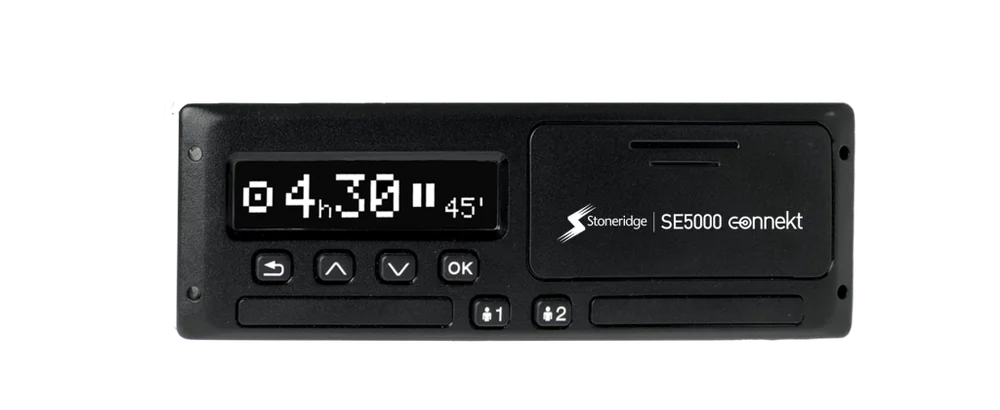
We choose the tachograph and installation method to suit your vehicle.
VANS OVER 2.5 T AND UP TO 3.5 T
When is a tachograph required?
From 1 July 2026, EU rules cover an additional group of light commercial vehicles. The relevant factors are the authorised mass and the type of transport.
Maximum authorised mass over 2.5 t
A trailer or semi-trailer is included. The threshold concerns the maximum authorised mass, not the actual weight of the load.
International transport or cabotage
The extension applies to goods transport. It does not mean that every van used only within Poland must have a tachograph installed.
Smart 2 tachograph
Vehicles covered by this requirement use a second-generation smart tachograph, version 2 — G2V2.
Carrying your own goods does not automatically make you exempt. For vehicles or combinations with a maximum authorised mass over 2.5 t and up to 3.5 t, the exemption requires, among other conditions, carriage on own account that is not for hire or reward, and driving must not be the driver's main activity.
If the combination's maximum authorised mass exceeds 3.5 t, requirements may already have applied before this extension, including to domestic transport. Each case must be assessed individually.
Scope and exemptions: GITD guidance and transport on own account. Smart 2: European Commission information.
FROM THE FIRST ENQUIRY TO VEHICLE COLLECTION
How does installation at SCT work?
We first assess your specific vehicle. That way, before the visit, you know what work we have agreed on.
- 01
We check the vehicle
We identify the van version, how it is used and the technical options for installation. If needed, we ask for additional details or photos.
- 02
We choose the installation setup
We agree on the tachograph, required components, installation location, price and date. The scope depends on the equipment fitted to your vehicle.
- 03
We install and calibrate
We carry out the agreed installation, activation and calibration of the tachograph. We check that it works and secure the connections as required.
- 04
We explain how to use it
When you collect the vehicle, we explain the basics of using the tachograph. You can also arrange data downloads and driver working time records with us.
FROM OUR WORKSHOP
Installations completed at SCT.
Selected installations in vans and a pickup. See how we choose tachograph locations to suit different cab layouts.
Marcin Albanowicz
Marcin Arasimowicz
AUTHORISED VDO AND STONERIDGE SERVICE
Hundreds of installed
tachographs.
We install tachographs in almost any vehicle — from vans to pickups and unusual cab layouts. We adapt the installation location and setup to the specific vehicle.
We use VDO WorkshopTab and Stoneridge Optimo tools. We confirm the installation options and scope of work after checking the vehicle.
PREPARE BEFORE CONTACTING US
A quote for your van.
Give us a few details so we can assess the installation options and choose the right equipment.
- Make, model and year of manufactureAlso include the transmission type and whether the vehicle has had a tachograph.
- Maximum authorised mass of the vehicle and trailerIf you use a trailer, include its details too.
- Type of transportDomestic or international, for hire or reward or on own account.
- Preferred dateIf needed, we will ask for the VIN or specific photos later.
PRACTICAL ANSWERS
What do
van owners ask?
Have a different vehicle or an unusual transport operation? Tell us about your situation.
No. The requirement extended from 1 July 2026 applies to goods transport in international operations or cabotage where the maximum authorised mass of the vehicle, including any trailer, exceeds 2.5 t. The statutory exemptions must be considered. Domestic-only transport with a vehicle or combination up to 3.5 t is not covered by this extension.
Ownership of the goods alone is not enough. The exemption in Article 3(ha) of Regulation 561/2006 applies to a vehicle or combination with a maximum authorised mass over 2.5 t and up to 3.5 t where the carriage is not for hire or reward, is on the own account of the undertaking or driver, and driving is not the driver's main activity. All these conditions must be met together.
The options and installation method depend on the specific vehicle. We check, among other things, the drivetrain, available signals and space for the unit. Only after this assessment do we confirm the required components and scope of work. For an initial discussion, prepare the van's make, model and year of manufacture.
We agree on the cost and date after checking the vehicle. The quote depends on the selected tachograph, required installation components and work on the vehicle. Before booking the visit, we confirm what the service includes and agree on how long the van needs to stay at the workshop.
The agreed service includes installation, activation, calibration and checking the tachograph, together with the required protection of the installation. In Poland, these activities are often colloquially referred to as legalisation. The tachograph must subsequently undergo periodic inspections at least every two years; certain changes or repairs may require an earlier visit.
As well as a working device, you need to use it correctly, have a driver card and arrange for data to be downloaded and stored. Transport covered by the rules also requires compliance with driving time, breaks and rest periods. At SCT, you can also arrange data downloads, purchase a reader and get help with driver working time records.
Information checked on 30 September 2026. Periodic inspections: Article 23 of Regulation (EU) No 165/2014. Assessing the requirement involves the specific transport operation and the applicable exemptions.
SUPPORT AFTER INSTALLATION
The tachograph is just the start.
We also help with data downloads and driver working time records.